
Nursing cover supplier for retail and private label programmes
A nursing cover — also sold as a breastfeeding cover — is specified by shape, neckline and fabric weight. We supply boned apron covers, infinity scarf covers, 360-degree nursing shawls and muslin nursing aprons, printed or plain, packed flat or in a printed pouch. Orders are wholesale nursing covers for distributors or private label covers under your own brand.
What the styles look like
Pieces from the current range, photographed as examples. Prints, colourways and packaging shown are samples of what we run — your own artwork is applied at the sampling stage.
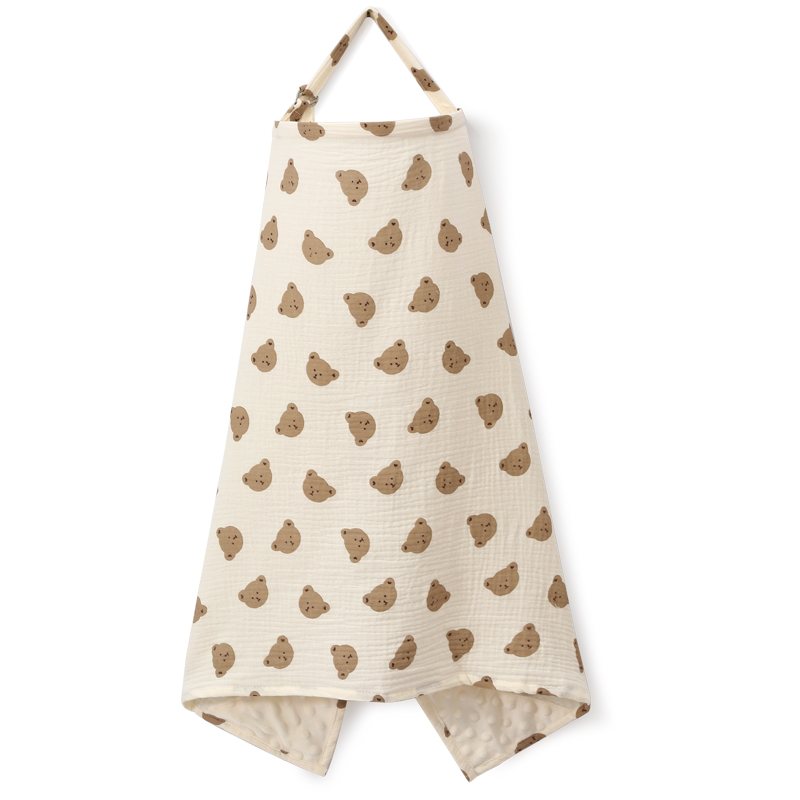
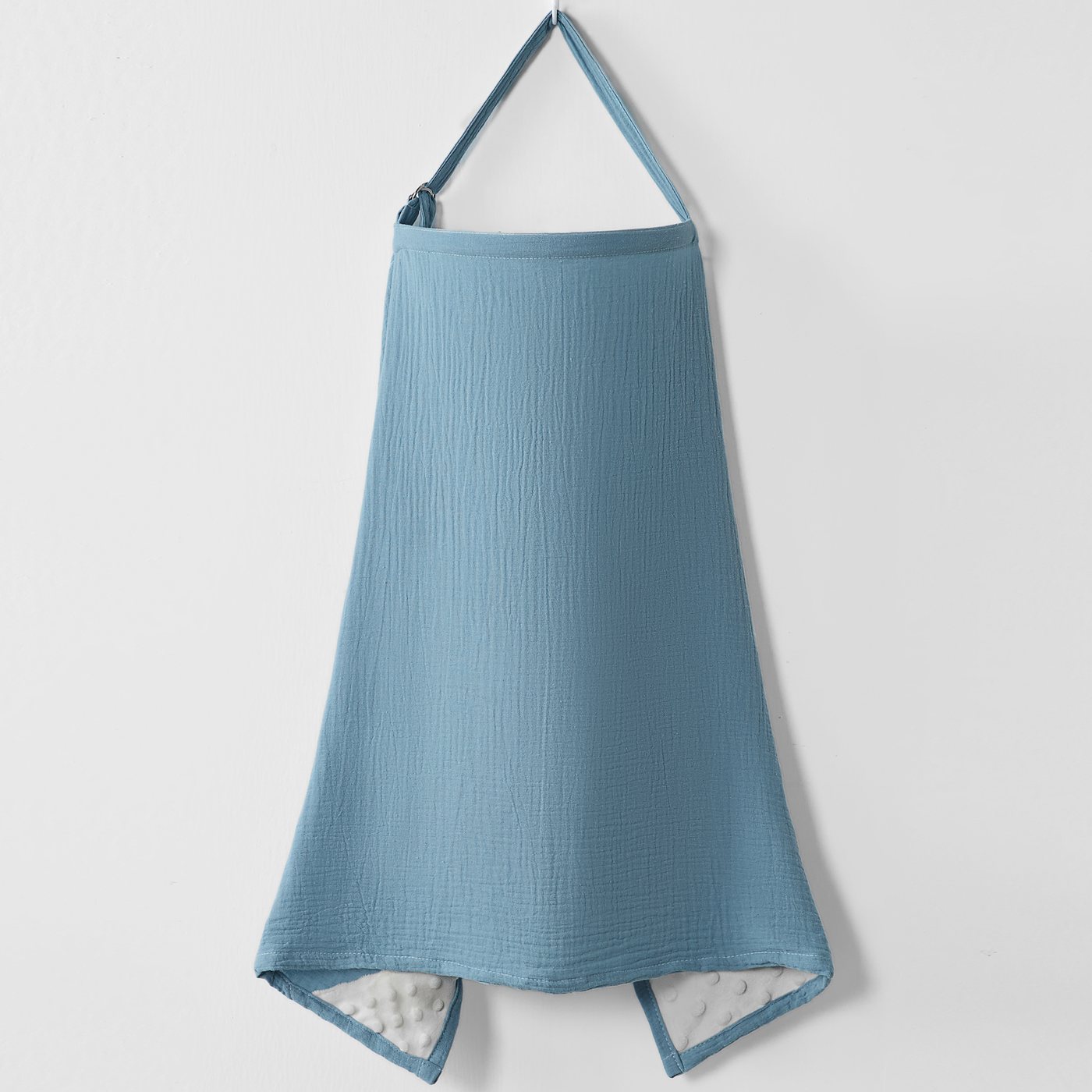
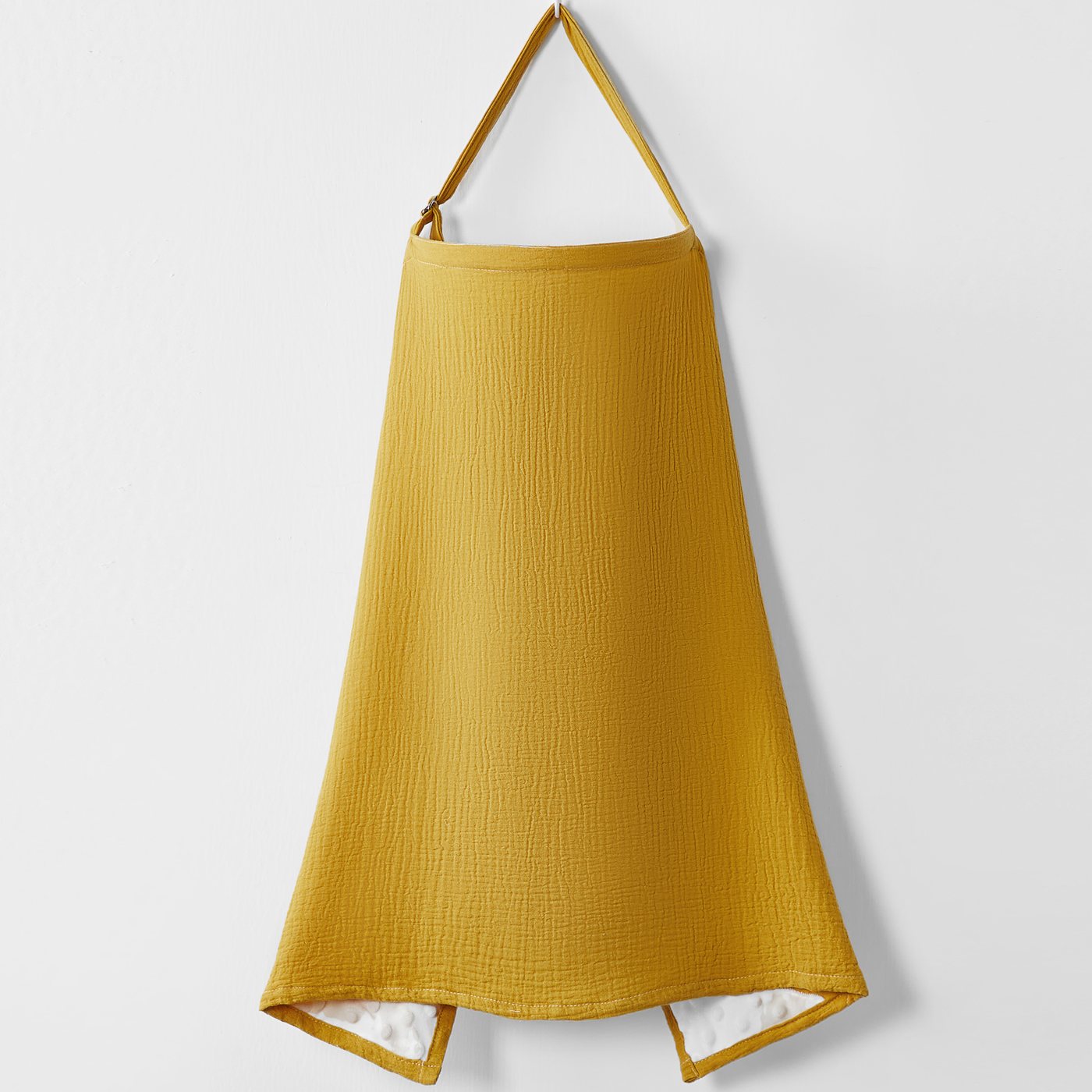
An apron and a scarf cover are different products
They share a category page in retail and a keyword in search, but they are cut, packed and reviewed differently. Choosing the shape first is what keeps the pattern money on one style.
| Style | Construction | Where it sells |
|---|---|---|
| Boned apron cover | Neck strap with boning holding a curved neckline | Privacy with eye contact: the parent can see the baby while feeding |
| Infinity scarf cover | A loop scarf that doubles as a cover | Discreet, wearable before and after feeding; no hardware |
| 360-degree nursing shawl | A wide circle or square draped around both | Full coverage front and back; also a pram or car-seat cover |
| Muslin nursing apron | Lightweight single or double gauze with an adjustable strap | Hot climates and summer programmes; breathability is the selling point |
| Car-seat cover (dual use) | A canopy with a stretch opening | Sold as one product with two jobs; the claim wording matters |
What to fix before sampling
| Point | Why it matters |
|---|---|
| Neckline and boning | Eye contact is the product’s core promise; a flat neckline is the most common returns driver |
| Fabric weight in gsm | Breathability is quoted, not assumed; two muslins can differ by 40% in weight |
| Hardware | Rings, sliders and clips each have their own minimum and small-parts check |
| Edge finish | Open-weave muslin frays; rolled and bound edges cost more and last longer |
| Coverage | Front, sides and back coverage are measured points, not a description |
| Packing | A printed pouch or box is its own bill of materials and often sets the minimum |
A cover worn while feeding is a different product from a car-seat canopy, even when the fabric is the same. The claim wording on the pack is agreed before print, per market.
What is specified on the order, and what varies
Every line below appears on the specification you receive with the quote. The third column is the honest part: what changes from style to style, so you know which points to fix and which to leave open.
| Item | What we specify | Where it varies |
|---|---|---|
| Style | Apron with neck strap and boning, infinity scarf, 360-degree shawl, or a car-seat cover that doubles as a cover | Per style; a boned apron and a scarf cover are different patterns |
| Fibre | Cotton muslin (single or double gauze), cotton-rayon blend, or a stated knit | Per style; the blend is stated as percentages, never as a trade name |
| Fabric weight | Quoted in gsm | Per fabric; breathability is the selling point, so weight is checked, not assumed |
| Neck opening | Adjustable strap (ring, slider or clip), or a fixed rigid neckline with boning | Per style; hardware choice changes both cost and the small-parts review |
| Coverage and cut | Front coverage, side panels, and whether the nursing parent can see the baby | Per style; eye contact is the reason the boning exists |
| Edge finish | Rolled hem, double-fold hem or bound edge | Per fabric; open-weave muslin frays, so the hem is a spec point |
| Packing | Flat polybag, drawstring pouch, or a printed box for gifting | Per artwork; the pouch is its own bill of materials |
| Labels | Woven main label, printed care and composition label | Per artwork; wording checked against the destination market |
If your own tech pack uses different points of measure, send it. We work from your document and note where it differs from ours, rather than silently translating it.
What can carry your brand
Private label, custom print and custom development are three different jobs with three different minimums. The third column says which one you are actually buying into.
| Element | What we can do | What drives the minimum |
|---|---|---|
| Digital or rotary, all-over or placement, on one or both faces | Print minimum per artwork and per colourway | |
| Colour | Stock muslin shade, or dyed to a colour standard | Dye lot minimum per colour |
| Hardware | Neck strap, rings, sliders or clips, chosen with you | Hardware lot minimum; each option is its own small-parts check |
| Labels | Woven or printed main label, care and composition label | Label run |
| Packaging | Flat polybag, printed drawstring pouch, or gift box | Pouch or box print run, usually the binding constraint on a gifting range |
| Pattern | Apron, scarf, shawl or dual-use car-seat cover | Separate patterns per option, plus sampling |
How the minimum is calculated
We do not publish one headline minimum, because a single number is always the easiest combination rather than yours. These are the rules the number comes from.
| Question | How it works |
|---|---|
| How the minimum is calculated | Largest of: fabric run, print minimum per artwork and colourway, style minimum, and the pouch or box print run. A drawstring pouch with a printed logo is often the binding constraint. |
| How colours and styles combine | Each artwork is its own print minimum. A plain-colour programme mixes more freely than a printed one, because dye lots, not prints, set the floor. |
| Mixing within one order | Covers can share muslin fabric and print screens with swaddles or blankets in the same programme, which usually lowers the minimum of the second product. |
| Repeat orders | A repeat on an approved sample and an existing fabric carries a lower minimum than a first order; the number is stated in the first quote. |
| Price breaks | Fabric, making, hardware, packing and testing are quoted as separate lines with quantity breaks, so two quotes compare on the same basis. |
What you send, what comes back
Sampling is where a specification stops being a document. This is the sequence, and what each stage settles.
| Stage | What happens |
|---|---|
| What to send | A reference cover or photos, the style direction (apron, scarf or shawl), the artwork if printed, and the destination market. |
| What we send back | A specification sheet with the neck-opening and coverage dimensions, the hardware choice, and the packing format. |
| What the sample settles | Breathability at the agreed gsm, strap adjustability, boning behaviour, and whether the parent can maintain eye contact. |
| Cost and timing | Sample cost and stage timing are stated in the quote; hardware and pouch printing each add a stage. |
| Sealed sample | Bulk follows the sealed sample for coverage, hardware and hem. |
Lead time is quoted per stage — sampling, material, bulk, shipping — rather than as one figure that hides where the waiting is. The same applies to sample cost: it is stated with any credit against bulk.
What a document covers, and what it does not
A test report is only useful if you know its boundary. The third column is the boundary, written the way we would explain it on a call.
| Document | Covers | Does not cover |
|---|---|---|
| In-house inspection record | Coverage dimensions, strap pull test, hem integrity, per batch | Our own record, not a third-party report |
| Fibre composition statement | Composition of the batch as labelled | A declaration, not a certification |
| Certificate (if held) | The fabrics listed on the certificate, within validity | The supplier-held fabric certificate covers the fabric, not the finished cover |
| Safety review | Hardware and small-parts check on strap, rings and clips, per style | A cover is used while a baby feeds; it is not sleepwear and is not documented as such |
How buyers build a nursing cover line
A newborn feeds 8 to 12 times a day, and a cover in rotation is washed almost daily, so most retail programmes launch with 2 or 3 covers per pack or range and a spare on the registry. The structure below is the one that repeats across buyers.
| Range type | What carries it | What to watch |
|---|---|---|
| Gifting programme | A printed muslin cover in a pouch or box, paired with a swaddle | The pouch print run is the real minimum; plan it with the swaddle pack |
| Everyday essential | 1 or 2 plain or tone-on-tone covers with an adjustable strap | Dye lots, not prints, set the floor; hardware is the cost lever |
| Multi-use line | An infinity scarf cover plus a 360-degree shawl that doubles as a car-seat canopy | The two-job claim wording is agreed per market before print |
Covers share muslin fabric and print screens with swaddles in the same programme. Two muslins sold as the same weight can still differ by up to 40% in GSM, so the weight is written per fabric, not per category.
Questions buyers ask
What is a nursing cover?
Why does the neckline matter?
Muslin or knit for the cover?
Can we print our artwork?
Do covers need testing?
Building a nursing cover line?
Send the style direction, the artwork, the packing format and the quantity. We confirm the neckline, hardware and breathability target before sampling.