
Cotton vs bamboo viscose sleep sacks for baby brands
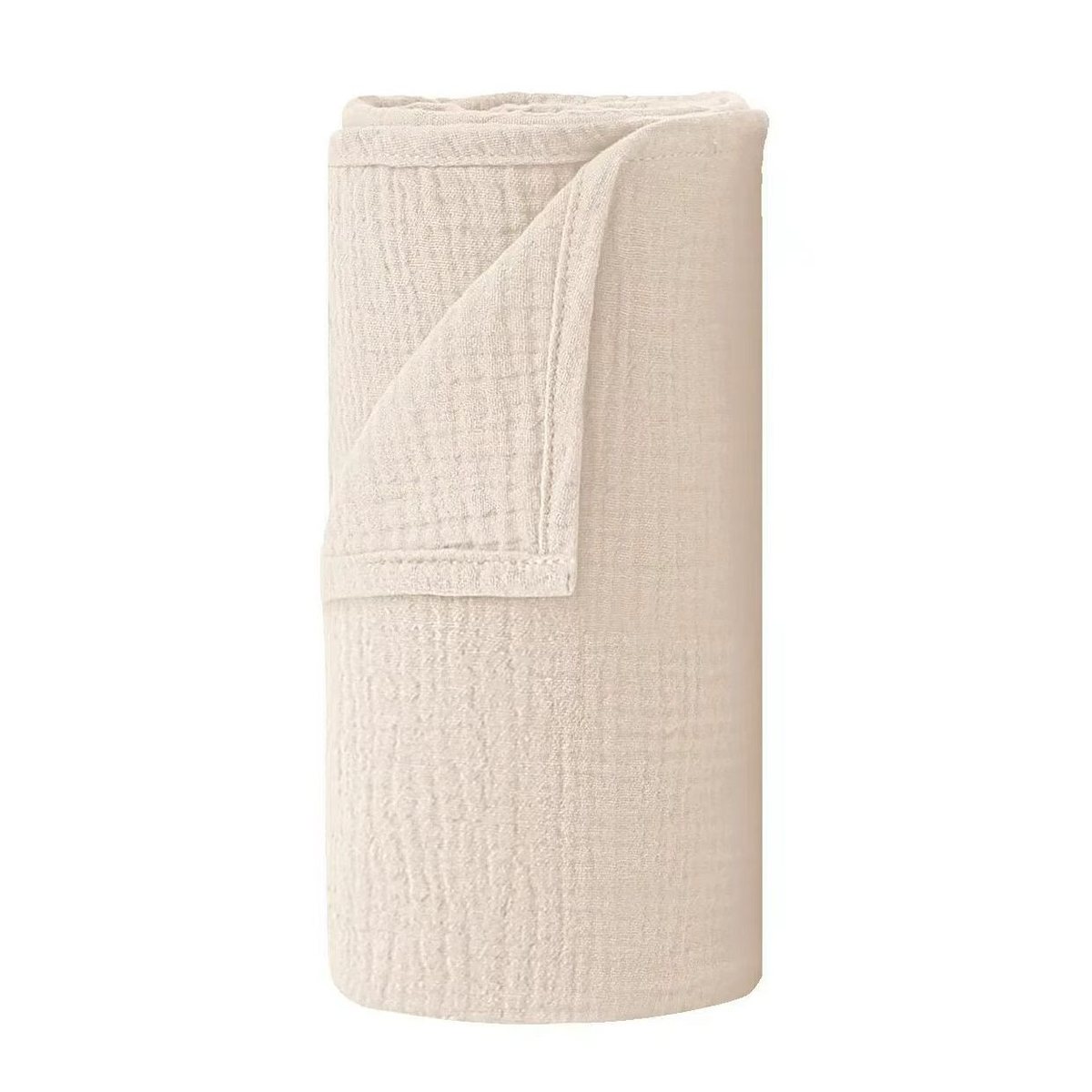
Cotton is a natural fibre; viscose from bamboo is a regenerated cellulose fibre made from bamboo pulp. They behave differently in drape, shrinkage and print, and they are labelled differently: in the United States a bamboo-derived viscose garment must be described by its fibre name, not as bamboo. This guide is for brands choosing a shell fibre for a first sleep sack range, and for buyers who have to defend the fibre name on a label.
Two different fibre chains
Cotton is spun from a plant fibre. Viscose from bamboo is made by dissolving bamboo cellulose and regenerating it into filament, then cutting and spinning it. That is why the correct trade description is viscose from bamboo or rayon from bamboo, and why the two fabrics do not share a care profile even when they look similar on a hanger.
This matters commercially before it matters technically: the label has to be right in every market you sell into, and a wrong fibre name is a compliance problem rather than a marketing one.
Side by side
| Property | Cotton (jersey, interlock, muslin) | Viscose from bamboo |
|---|---|---|
| Hand-feel | Dry, structured, predictable | Fluid, cool, heavier drape |
| Drape on a sleep sack | Holds shape; shows quilting clearly | Falls softly; hides stitch lines |
| Shrinkage | Manageable with pre-shrunk or tested fabric | Usually higher; must be tested, not assumed |
| Print result | Crisp; slight hand change on heavy coverage | Softer edge; colour can look deeper |
| Care | Machine wash, tumble dry typically tolerated | More sensitive to heat; care label matters more |
| Cost driver | Fibre origin, yarn count, weight | Fibre chain and finishing; often the higher-cost shell |
| Labelling | Cotton, or organic cotton only with a certificate covering the batch | Viscose from bamboo; not “bamboo” alone in the US |
What you can and cannot claim
Both fibres attract claims that need evidence. “Breathable”, “moisture-wicking” and “temperature-regulating” are performance claims, and a performance claim needs a test method and a result, not a fibre reputation. We describe what the fabric is and how it is constructed, and we state the TOG of the finished build. We do not write comfort promises into copy.
Organic cotton is the same rule in a different form: the word is only usable when the fibre chain carries a transaction certificate for that batch. Without the certificate, the honest description is cotton.
What the choice does to cost and minimum
Viscose from bamboo usually carries a higher fabric cost and narrower stock availability than a standard cotton jersey. That has two consequences that show up before the price does: the fabric minimum is often higher because the quality has to be made or reserved, and the colourway minimum is less flexible because fewer mills hold it.
The practical response is to launch bamboo viscose in one colourway and one or two sizes rather than across the full size set, and to run it in the same print as the cotton version. Sharing artwork means one print setup covers both fabrics, which is usually where a two-fabric range becomes affordable.
If the fabric has to be dyed to a colour standard rather than taken from stock, ask for the dye lot minimum in writing with the quote. It is the number most likely to change the plan.
Which one to launch first
If the range is a first collection and the buyer is price-sensitive at retail, cotton is the simpler launch: wider stock fabric availability, more predictable shrinkage, and fewer care complaints. Viscose from bamboo is usually the second SKU, sold on hand-feel to a customer who is already buying the cotton version.
The exception is a gifting or premium position where drape is the selling point. In that case bamboo viscose leads, and the care label and the wash testing become part of the product story rather than an afterthought.
Blending, and why it complicates the label
A cotton-viscose blend can give the drape of viscose with more structure, and it is a legitimate option. It also means the label has to state both fibres with percentages, and the care instruction has to satisfy the more sensitive of the two. Ask for the blend percentage in writing on the quote — “cotton blend” is not a specification.
| Field | Cotton version | Viscose from bamboo version |
|---|---|---|
| Shell | Cotton jersey, 160 gsm | Viscose from bamboo jersey, 170 gsm |
| Lining | Cotton jersey, 140 gsm | Same as shell, or cotton for structure |
| Shrinkage target | Test the quoted fabric | Test the quoted fabric — do not import a figure |
| Label | 100% cotton | Viscose from bamboo (fibre name, not “bamboo”) |
| Care | Wash and tumble as tested | Lower heat; the care label matters more |
The only honest basis for the shrinkage cell is a wash test on the fabric actually quoted. Illustrative values, not a stock product — they show the level of detail a spec sheet needs.
What we can put in front of you
Evidence for the points above, in the form a buyer can check rather than take on trust:
- Fibre content reportNames the fibre as tested, which is what the label has to say in the US and the UK.
- Three-wash dimensional changeOn the fabric quoted, not on a similar quality. This is what decides the sold size.
- Print strike-off, washedBecause viscose and cotton take ink differently, and heavy coverage changes the hand.
- Transaction certificateFor organic cotton, covering the batch. Without it the honest description is cotton.
From the question to a quote
- 1This guide — the decision behind the question, in the abstract.
- 2Baby sleep sacks — the construction, fabric and size specifications it applies to.
- 3All product lines — if the programme spans more than one line in the same shipment.
- 4Request a quote or a sample — send the fabric, the size set and the expected quantity.
Sources and standards
- US Federal Trade Commission — Threading Your Way Through the Labeling Requirements Under the Textile and Wool Acts (16 CFR Part 303)
- Global Organic Textile Standard — how the system works (fibre, processing, transaction certificates)
Links go to the issuing body’s own publication. Where a rule differs by market, the market is named in the text above; nothing here is a statement that a specific product is certified.
Frequently asked questions
Is viscose from bamboo a natural fibre?
Is bamboo viscose more breathable than cotton?
Can we call it bamboo on our packaging?
Which shrinks more after washing?
Related
Send three things, get a real answer
Fabric or construction direction, the size set you are planning, and the quantity you expect for a first order. Approximate is fine — the point is to quote against your programme rather than against an average. If you already have a reference sample or a spec sheet, send that instead and we will work from it.