
Baby clothes supplier for private label and wholesale orders
One programme covers the whole wardrobe: envelope-neck baby bodysuits and baby rompers for the day — footie rompers, long sleeve crawlers and two-way zip rompers included — and footed or footless baby sleepsuits for the night. Orders are private label baby bodysuits and private label baby pajamas under your brand, or wholesale baby clothing and wholesale baby pajamas for distributors, with US pajama and UK pyjamas naming confirmed per market.
What the styles look like
Pieces from the current range, photographed as examples. Prints, colourways and packaging shown are samples of what we run — your own artwork is applied at the sampling stage.
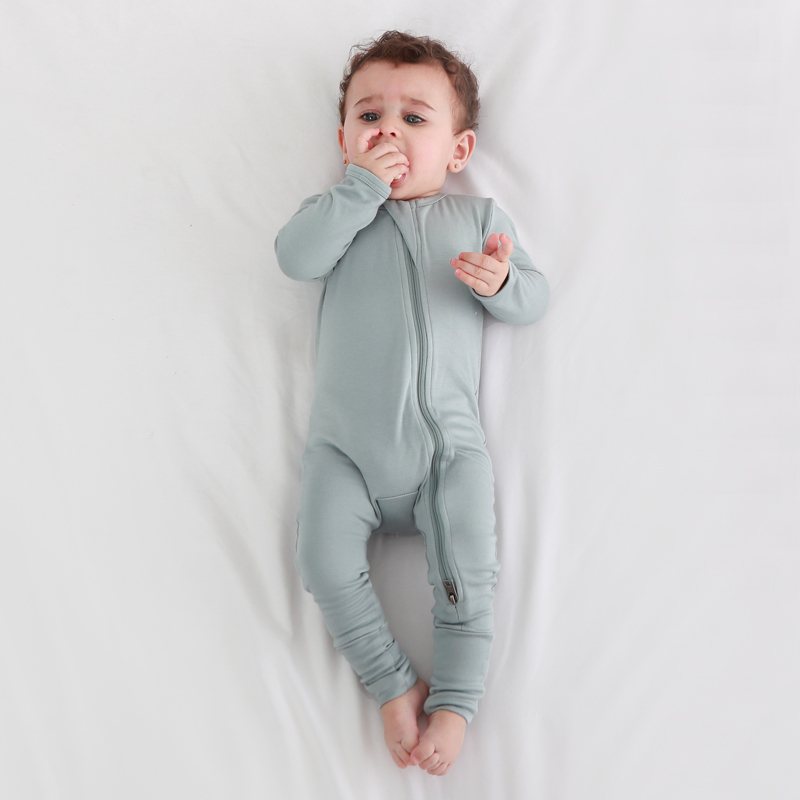
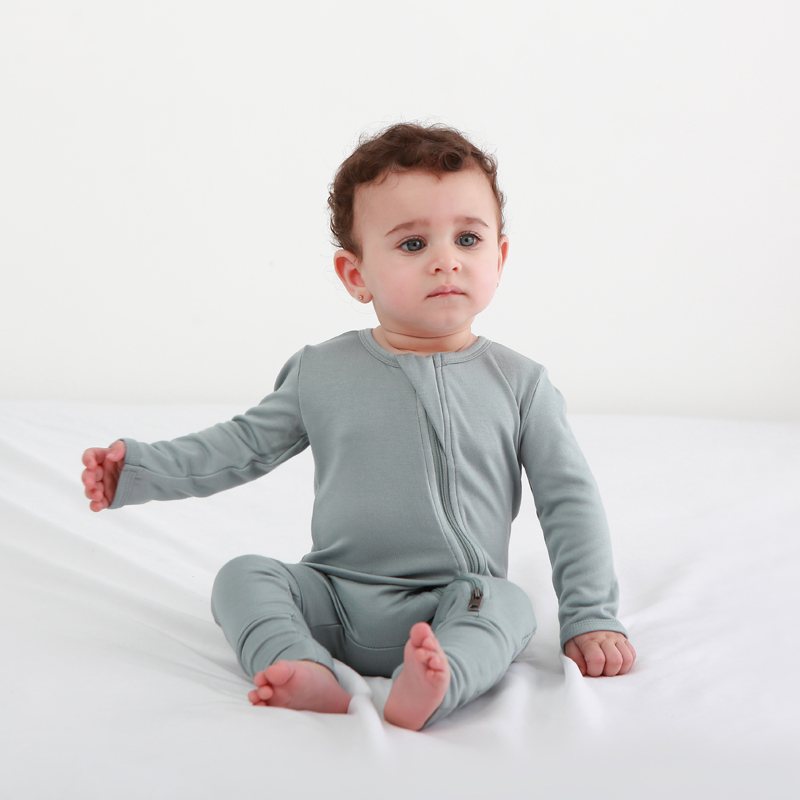
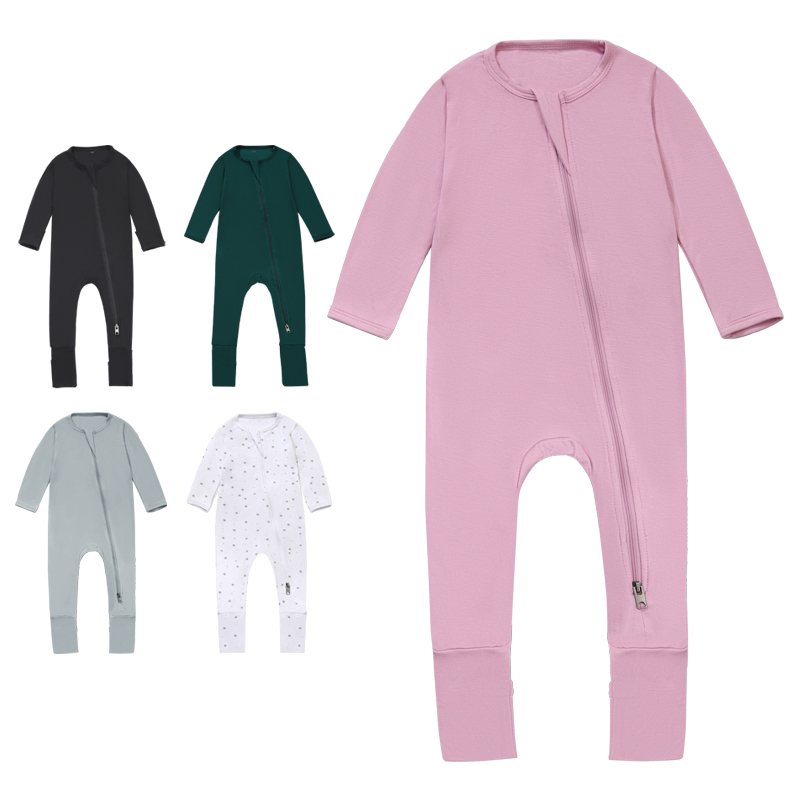
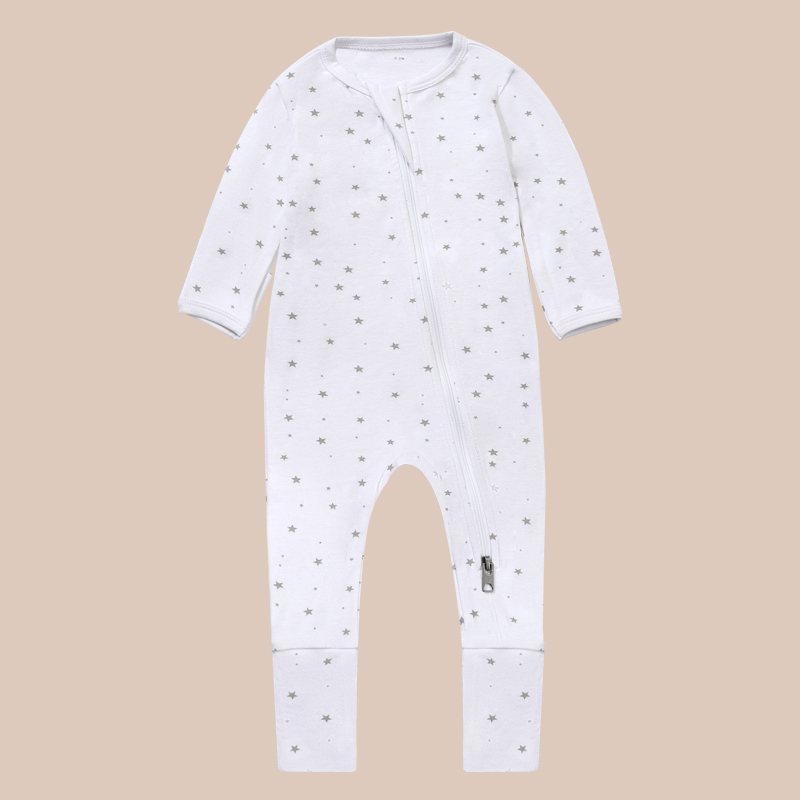
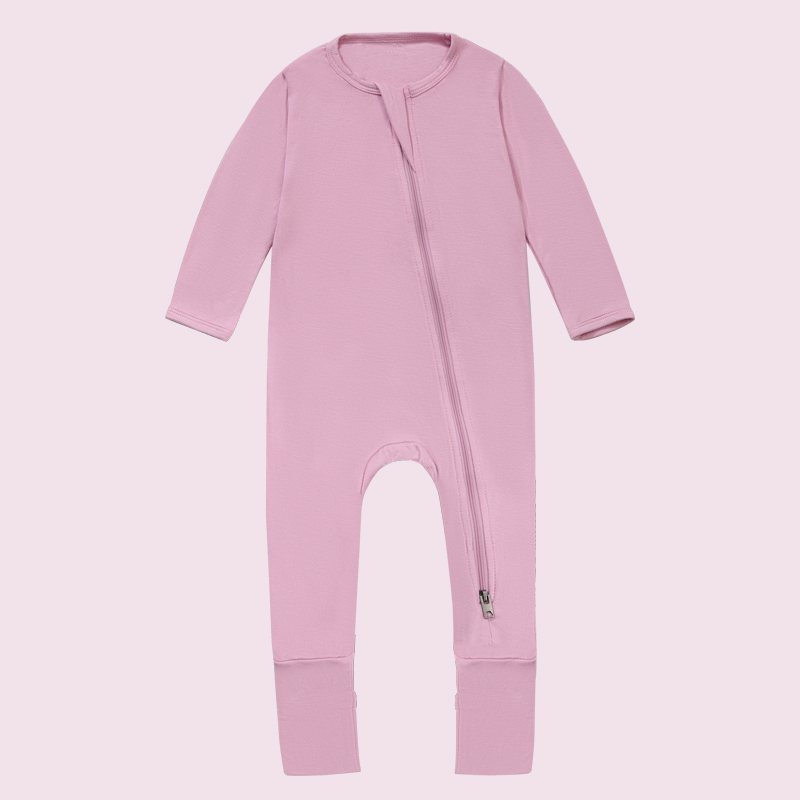
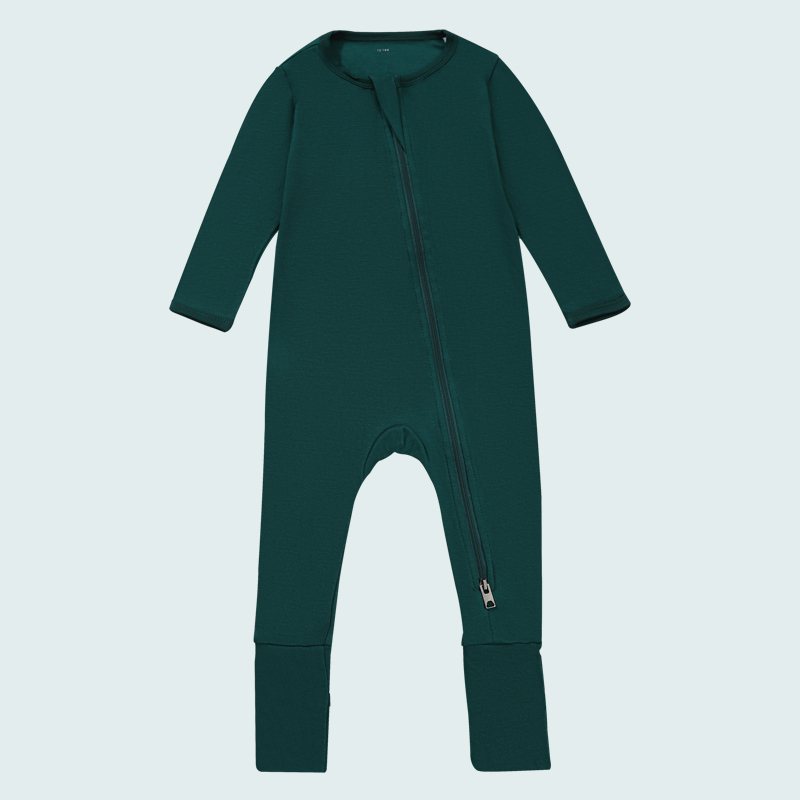
Naming cuts cost. Buyers who ask for “rompers” sometimes mean bodysuits, sometimes mean footed sleepwear, and occasionally mean a two-piece set. The pattern, the fabric consumption and the minimum all follow from that one word, so we settle it on the first call.
Getting the product name right
| Term | What it actually is | Where it belongs |
|---|---|---|
| Bodysuit | One-piece with a closed crotch, poppers or a snap placket | Base layer, worn under everything |
| Romper | One-piece, usually with legs, worn as an outer garment | Everyday and summer wear |
| Footie romper | Romper with enclosed feet and a zip or popper front | Newborn comfort wear; a two-way zip romper makes nappy changes a one-hand job |
| Long sleeve crawler | Long-leg one-piece with reinforced knees, no feet | Crawling stage; the knee reinforcement is the actual spec point |
| Jumpsuit | One-piece with legs; not necessarily padded or workwear | Loungewear, heavier styles |
| Onesie | A trademarked brand term, not a generic product name | Do not use it as your product name |
| Sleepsuit / footed pajamas | One-piece with enclosed feet, for sleep | Detailed in the sleepwear section below |
Construction points that decide the fit
| Feature | What it does | What to check |
|---|---|---|
| Envelope neck | The overlap lets the garment be pulled down over the body rather than over the head. | Neckline stretch and recovery after wash. |
| Snap crotch | Nappy access without removing the garment. | Poppers must be checked for attachment and sharp edges. |
| Short / long sleeve | Season and layering choice. | Sleeve length is a spec point, not a style note. |
| Footed leg | Enclosed foot for warmth; the standard for newborn and infant sizes. | A separate pattern piece, and foot length is a graded measurement. |
| Footless / hemmed leg | Open leg, easier for a walking toddler. | Different grading at the leg; not a variation of the footed pattern. |
| Side opening | Flat front for print, easier dressing on a newborn. | More panels, more seams, higher cost. |
| Flat seam | Reduces bulk against the skin. | Only claim flat seam if the seam is actually flat: it is not the same as seamless. |
| Fold-over cuff | Covers the hand to stop scratching. | Cuff depth affects the pattern. |
| Tagless label | A heat-transfer care label instead of a sewn-in woven label, for skin comfort. | Transfer durability is a wash-test point: cracked transfers read as a defect. |
Fabrics we quote, and what each one costs you
The fabric decides the hand-feel, the shrinkage, the print result and the price, in that order of visibility. Weight alone is not a specification: a 180 gsm single jersey and a 180 gsm interlock behave differently on the same pattern.
Two names on this list need evidence before they reach a purchase order. An organic cotton bodysuit is only organic if the fibre chain carries a transaction certificate for that batch; without it the word is a labelling risk, not a selling point. A bamboo bodysuit is a viscose bodysuit, and in the United States it has to be described by its fibre name, so the care label reads viscose from bamboo rather than simply bamboo. The same rule applies to a baby romper made in a viscose blend.
| Fabric | Typical weight | Why buyers choose it | What to watch |
|---|---|---|---|
| Combed cotton jersey | 160–190 gsm | Soft, takes print well, the everyday base layer | Shrinkage; specify pre-shrunk or tested |
| Cotton / elastane 95/5 | 180–200 gsm | Recovers shape, easier to dress a newborn | Blend percentage is a legal statement |
| Rib knit | 200–220 gsm | Stretch at the neckline and cuffs | Rib width changes the size chart |
| Interlock | 190–210 gsm | Smooth on both faces, edges curl less | Heavier hand-feel at the same weight |
| Modal / cotton blend | 170–200 gsm | Drape and a premium hand-feel | Pilling after repeated washing |
| Bamboo viscose / cotton | 160–200 gsm | Soft hand-feel and drape; the fibre the market asks for by the bamboo name | Labelled as viscose from bamboo in the US; blend ratio is a legal statement |
| Waffle / pointelle | 200–240 gsm | Texture is the design feature | Print registration is harder on a raised surface |
Size grading and tolerances
Baby clothing is graded from a base size across a set of points of measure. Because body proportions change quickly in the first 24 months, the grab rule is usually split: one rule for the small sizes and a second for the toddler sizes. We quote the size chart, the grade rule and the tolerances together, because a chart without tolerances is not a specification.
| Size band | Height | Grading note |
|---|---|---|
| Newborn | up to 56 cm | Generous body, short leg; nappy room is the constraint |
| 0–3 months | 56–62 cm | Neckline recovery matters most |
| 3–6 months | 62–68 cm | Body length grows faster than chest |
| 6–12 months | 68–80 cm | Largest volume band in most ranges |
| 12–24 months | 80–92 cm | Split grade rule usually starts here |
| 2–3 years | 92–98 cm | Leg length and rise need separate grading |
Children’s clothing is not ordinary apparel
Children’s garments carry labelling, small-parts and in some markets flammability requirements that differ from adult apparel and differ between the US and the UK. The applicable route is confirmed per style, per fibre and per market before bulk, not after.
We do not describe a garment as “compliant” in general. We tell you which document covers which style in which market, and who issued it.
Two markets, two product names
The single most useful thing a supplier can do here is use the buyer’s word. A brand selling into both markets needs one garment and two sets of copy.
| United States | United Kingdom | Garment |
|---|---|---|
| baby pajamas / footed pajamas | baby sleepsuit / baby pyjamas | One-piece with enclosed feet |
| sleeper / sleep and play | babygrow / baby grow | One-piece, feet optional |
| footless pajamas | pyjamas without feet | One-piece or set, open foot |
| two-piece pajama set | pyjama set | Top and bottom |
Construction choices
| Choice | Effect on the product | Effect on cost and risk |
|---|---|---|
| Footed | Warm feet, no socks | Extra pattern piece and a closure at the leg |
| Footless | Suits walking toddlers | Different grading at the leg |
| Zip front | Fast dressing | Zip and guard cost; puller is a small part |
| Two-way zip | Nappy access without undressing | Higher zip cost, longer pattern work |
| Snap placket | Cheaper, softer against the skin | More labour per unit, more attachment points |
| Fold-over cuff | Hands covered | Small pattern change, visible quality cue |
Fabrics for sleepwear
Sleepwear fabric has one requirement daywear does not: it has to survive washing at a higher temperature and stay soft. Weight and fibre both matter, and the blend has to be stated exactly because it is a legal statement on the label.
| Fabric | Typical weight | Where it is used | What to watch |
|---|---|---|---|
| Cotton jersey | 180–200 gsm | Light sleepwear, summer sets | Shrinkage after the first hot wash |
| Cotton interlock | 200–220 gsm | Footed sleepsuits, newborn sizes | Body length drop after washing |
| Rib knit | 220–260 gsm | Cuffs, neckbands, stretch panels | Recovery, not just stretch |
| Brushed cotton / flannel | 150–180 gsm | Winter sleepwear, heavier hand-feel | Surface fuzz and pilling |
| Waffle knit | 220–260 gsm | Two-piece sets, premium ranges | Weight adds cost faster than warmth |
Construction, in the order it fails
- Zip guard and puller. Sits against the chin, so it is both a comfort point and a small-parts check. A detachable puller is the most common recall trigger on this product.
- Neckline recovery. A ribbed neck that stretches out in the wash is the first complaint a buyer hears, and it is a specification decision, not a sewing mistake.
- Seam type. Flat seams where the garment touches the skin; overlocked seams are cheaper but sit proud. Claim flat seam only when the seam is flat.
- Cuff and hem depth. Fold-over cuffs need enough depth to stay folded after washing; a shallow cuff unrolls and looks like a defect.
- Leg opening and foot length. On footed styles, foot length is graded separately from body length, which is why a footed pattern cannot be re-graded from a footless one.
Read this before you quote a sleepwear programme. Children’s sleepwear sits in a stricter regulatory category than daywear in several markets, and the requirement follows the design, the fibre and the fit, not the product name. A garment sold as sleepwear but built like daywear is the classic failure. We confirm the route per style, in writing, before sample approval.
What we need to quote sleepwear
- Target market and the exact selling channel
- Footed or footless, zip or popper, one or two piece
- Fibre composition and fabric weight
- Size set and whether the range spans infant and toddler
- Any existing test reports or a reference style you already sell
What is specified on the order, and what varies
Every line below appears on the specification you receive with the quote. The third column is the honest part: what changes from style to style, so you know which points to fix and which to leave open.
| Item | What we specify | Where it varies |
|---|---|---|
| Style | Envelope-neck bodysuit, snap-crotch bodysuit, short romper, long romper, footed sleepsuit, two-piece pajama set | Per style; a romper is not a bodysuit with longer legs |
| Fibre | Cotton jersey, interlock, rib, or a stated blend | Composition stated as a percentage on the label |
| Fabric weight | Quoted in gsm with a tolerance band | Per fabric; lighter knits show fit problems sooner |
| Neckline | Envelope shoulder, ribbed crew, or popper placket | Envelope necks need a wider cut, not just a different seam |
| Closure | Snap crotch, poppers, full-length zip, or a two-way zip | Snap placement is a fit decision, not a trim decision |
| Seams | Overlock or flat seam | Flat seam only where the seam is actually flat |
| Size band | Height and weight based, with points of measure per size | Graded separately for bodysuits and rompers |
| Feet | Enclosed foot, fold-over cuff, or open foot | Foot length is graded separately from body length |
| Print and labels | All-over or placement print; woven main label, care label, size flag, and any required sleepwear wording | Per artwork and per market |
If your own tech pack uses different points of measure, send it. We work from your document and note where it differs from ours, rather than silently translating it.
What can carry your brand
Private label, custom print and custom development are three different jobs with three different minimums. The third column says which one you are actually buying into.
| Element | What we can do | What drives the minimum |
|---|---|---|
| All-over rotary or digital; placement print at extra registration per size | Print minimum per fabric and colourway | |
| Colour | Stock shade, or dyed to a colour standard | Dye lot minimum |
| Labels | Woven main label, printed care label, size flag, brand neck tape, and the sleepwear wording the market requires | Label run; wording is checked before print |
| Packaging | Polybag, hanger, belly band, printed box | Packaging print run |
| Pattern | Neckline, closure, sleeve and leg length, footed or footless, one or two piece, and the grade rule | Separate patterns per option, plus grading across the size set and sampling |
How the minimum is calculated
We do not publish one headline minimum, because a single number is always the easiest combination rather than yours. These are the rules the number comes from.
| Question | How it works |
|---|---|
| How the minimum is calculated | Largest of: fabric run, print or dye lot, style minimum per size and colour, and packaging. On multi-size clothing programmes the size-and-colour minimum is usually the constraint. |
| How colours and sizes combine | The minimum applies per size and colour. A five-size range in three colours is fifteen combinations before any print is added. |
| Mixing within one order | Garments in the same shell fabric can share a fabric minimum; each style still carries its own making minimum. |
| Repeat orders | A repeat on an approved pattern and existing fabric is quoted against a lower minimum. |
| Price breaks | Fabric, cut-and-sew, trims, packing and testing are quoted separately with volume breaks. |
What you send, what comes back
Sampling is where a specification stops being a document. This is the sequence, and what each stage settles.
| Stage | What happens |
|---|---|
| What to send | Reference garment or tech pack, footed or footless, closure type, size set, fabric preference, artwork and destination market. |
| What we send back | A specification with points of measure per size, the grading rule, the minimums, and a sampling plan. |
| What the sample settles | Neck opening and recovery, snap placement, leg opening, zip run and guard, foot length and toe room, body length after wash, and print registration across seams. |
| Cost and timing | Quoted per style; grading across a size set takes longer than one size and is priced accordingly. |
| Sealed sample | Bulk is measured against the sealed sample, size by size. |
Lead time is quoted per stage — sampling, material, bulk, shipping — rather than as one figure that hides where the waiting is. The same applies to sample cost: it is stated with any credit against bulk.
What a document covers, and what it does not
A test report is only useful if you know its boundary. The third column is the boundary, written the way we would explain it on a call.
| Document | Covers | Does not cover |
|---|---|---|
| In-house inspection record | Points of measure per size, seam and snap security, print placement, per batch | Our own record, not a third-party report |
| Third-party test report | The standards named in the report, for the style submitted | Does not cover a change of fibre, weight or closure |
| Flame-resistance route | The route that applies to this design and market, with the covering document named in writing | We do not make a flame-resistance claim without the report for that style |
| Fibre composition statement | Composition of the batch as labelled | A declaration, not a certification |
| Safety documents by market | Cords, drawstrings and small parts checked against the route that applies to the market | Confirmed per style in writing before bulk |
| Certificate (if held) | Only the products and processes listed, within validity | Never presented as covering the whole range |
Questions buyers ask
What is the difference between a bodysuit and a romper?
Can you use the word onesie on our packaging?
How does size grading work for baby clothing?
What fabrics do you use for bodysuits?
Do you do all-over print on bodysuits?
What is baby sleepwear called in the US and the UK?
Does sleepwear need special testing?
Footed or footless?
One-way or two-way zip?
Can sleepwear carry a flame-resistance claim?
Adding a clothing line?
Send the style, the size set and the market you are selling into. We will come back with a specification, a grade rule and a sampling plan.